What Is Pelvic Congestion Syndrome?
Pelvic congestion syndrome (PCS) is a condition similar to varicose veins in the legs and is a common cause of chronic pelvic pain in women of childbearing age. It most often results from dilated and congested ovarian veins within the pelvis, although other pelvic veins may also be affected.
Pain associated with PCS is typically chronic and persists throughout the menstrual cycle, which can make the condition particularly debilitating.
Risk Factors
- Multiple pregnancies
- A tilted uterus
- Polycystic ovary syndrome (PCOS)
- Varicose veins in the legs
- Hormonal imbalances
Although approximately 10 percent of women have dilated ovarian veins, only about 60 percent of those develop pelvic congestion syndrome. This makes diagnosis challenging, as the presence of enlarged veins alone does not necessarily mean pelvic pain is caused by PCS.
Once properly diagnosed, several effective treatment options are available. One of the most common and successful treatments is ovarian vein embolization.
Ovarian Vein Embolization for Pelvic Congestion Syndrome
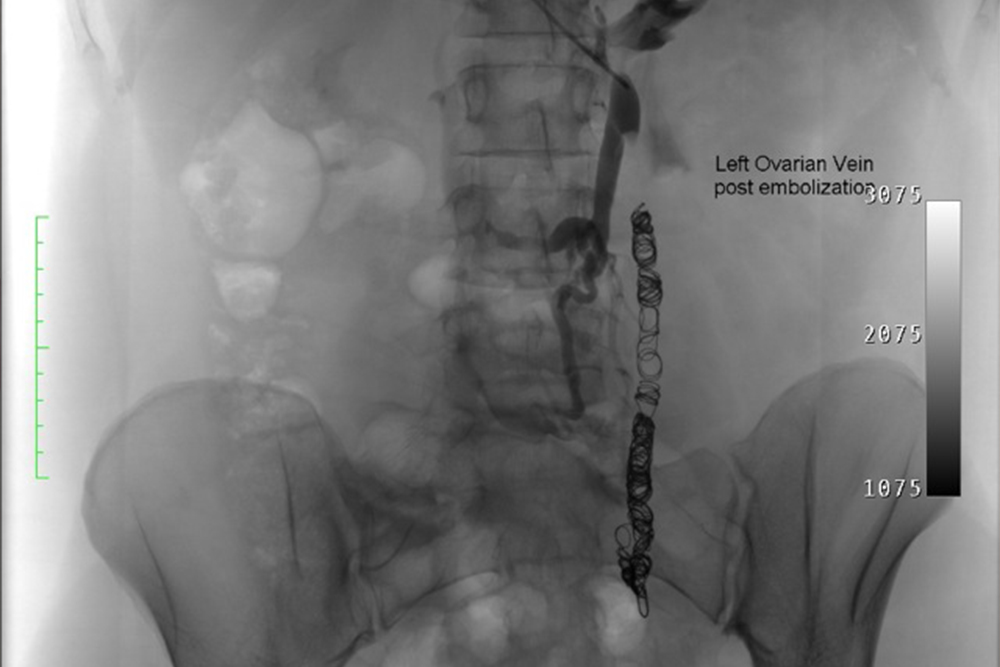
Ovarian vein embolization (OVE) is a minimally invasive procedure designed to relieve pelvic pain caused by PCS.
OVE is one of the most commonly performed procedures at Vascular and Interventional Partners in Phoenix, Arizona. The treatment is performed by specially trained interventional radiologists in a safe and comfortable clinical setting.
During the procedure, medications or permanent embolic agents are injected into abnormal veins to block blood flow to the affected area. A small catheter is inserted through a tiny access point, typically in the abdomen or groin. Using advanced X-ray imaging, the catheter is guided to the problematic veins, where embolic agents are released to close them off and relieve pressure.
After the procedure, the catheter is removed and pressure is applied to the access site to prevent bleeding. Stitches are usually not required, and scarring is minimal.
Types of Fibroids
Intramural Fibroids
Common type, grow within the muscular wall of the uterus, causing uterine enlargement.
Subserosal Fibroids
Create a bulge and pressure on surrounding organs on the uterus’s outer surface.
Submucosal Fibroids
Develop beneath the inner lining, protruding into the uterine cavity, leading to heavy menstrual bleeding.
Pedunculated Fibroids
Grow on a stalk inside or outside the uterus, causing symptoms based on location.
Symptoms of Uterine Fibroids
Menstrual Irregularities
Weighty and prolonged periods, longer or more frequent menstrual cycles, pelvic pressure or pain during periods.
Urinary and Digestive Issues
Frequent urination, difficulty emptying the bladder, constipation
Abdominal Changes
Growing stomach area
Pain and Discomfort
Pain in the stomach area or lower back, discomfort during sexual intercourse.
Serious Complications (Rare)
Sudden, severe pain if fibroids outgrow their blood supply and begin to die.
Benefits vs Risks
Like any medical procedure, ovarian vein embolization has both benefits and potential risks.
Benefits
- Less invasive than open surgery, with a lower risk of bleeding, infection, and complications
- Bleeding is easier to control compared to open surgical procedures
- Faster recovery with short hospital stays, often no longer than one day
- High success rates, frequently exceeding 75 percent
- No surgical incisions or stitches, resulting in minimal scarring
- A safe alternative for patients who are not good candidates for open surgery
Risks
- Rare allergic reactions to contrast material, anesthetic agents, or medical equipment
- Possible kidney injury related to medications used during the procedure
- Bruising or bleeding caused by unintentional vessel injury
- Infection at the catheter insertion site despite antibiotic use
- Rare injury to nearby organs such as the ovaries or uterus
- Recurrence of ovarian varices, which occurs in up to 10 percent of patients
FAQ
1. Does Ovarian Vein Embolization Affect Fertility?
In most cases, ovarian vein embolization does not negatively affect fertility. Untreated ovarian varices may be associated with infertility in some women, and in these cases, OVE can help improve the chances of conception. It is important to note that pregnancy after OVE may lead to recurrence of ovarian varices in some patients.
2. What Should I Expect After Ovarian Vein Embolization?
Mild pain and discomfort are common after OVE. Patients typically experience cramping and nausea during the first few days following the procedure. These symptoms are usually well controlled with medications provided at discharge. Most patients can return to work and resume normal daily activities within two days.
3. Can Ovarian Vein Embolization Be Reversed?
The embolic agents used during OVE may be either temporary or permanent. Temporary agents block blood vessels long enough for the body to heal naturally. Permanent agents permanently close the affected veins by causing controlled scarring, which helps reduce the risk of recurrence.
4. How Successful Is Ovarian Vein Embolization?
Success rates for ovarian vein embolization range from 75 to 95 percent. Most women experience symptom improvement soon after recovery, and only a small percentage require additional treatment.