What Can a Declot Procedure Treat?
A declot procedure is most commonly performed to restore blood flow in a dialysis access site, such as an arteriovenous (AV) fistula or graft. Over time, these access points can become partially or completely blocked by blood clots, interfering with effective dialysis. Declot procedures are also used to treat other conditions involving blocked or narrowed blood vessels throughout the body.
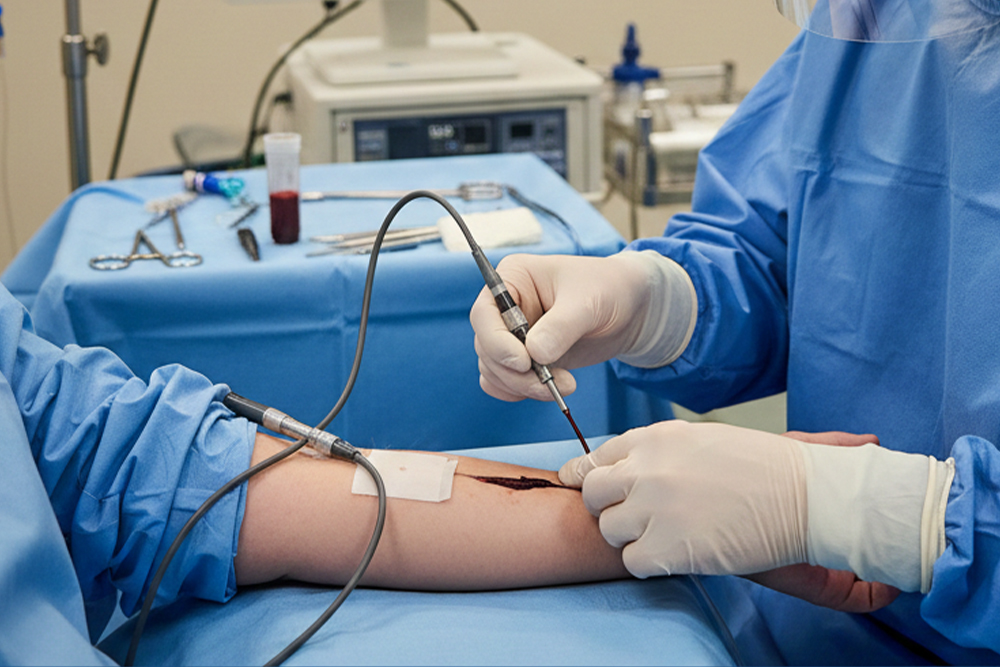
Conditions Treated With a Declot Procedure
Hemodialysis Access
Patients who require hemodialysis typically rely on a surgically created access site, such as an AV fistula or AV graft. These access sites can become narrowed or occluded due to clot formation. An AV fistulogram is often used to identify abnormalities in blood flow, while a declot procedure is performed to remove the clot and restore proper circulation, allowing dialysis to continue safely and effectively.
Peripheral Artery Disease (PAD)
Peripheral artery disease occurs when fatty plaque or blood clots narrow or block arteries, most commonly in the legs. In certain cases, a declot procedure may be used to remove clot material and improve blood flow to the affected limb, helping relieve symptoms and reduce the risk of tissue damage.
Pulmonary Embolism
A pulmonary embolism occurs when a blood clot travels to the lungs and obstructs blood flow, which can be life-threatening. In selected cases, particularly when the clot is large or causing severe symptoms, a declot procedure may be used to remove the clot and restore circulation, improving oxygen delivery to the body.
Mesenteric Ischemia
Mesenteric ischemia is a serious condition caused by reduced or blocked blood flow to the intestines. This can lead to severe abdominal pain and intestinal damage. A declot procedure can be used to remove the blockage, restore blood flow, and prevent further injury to the intestinal tissue.
Declot Procedure Benefits
Compared to traditional surgical treatments, declot procedures offer several important advantages:
- Minimally invasive, with no large incisions
- High success rate in removing or breaking up blood clots
- Short recovery time with minimal downtime
- Lower risk of complications compared to open surgery
- Rapid restoration of blood flow
- Improved patient outcomes with reduced procedural stress
FAQ
1. Who Should Undergo a Declot Procedure?
You may be a good candidate for a declot procedure if you have been diagnosed with deep vein thrombosis (DVT) or are experiencing reduced or blocked blood flow in an arteriovenous (AV) fistula or graft used for dialysis. Other factors that may make someone a suitable candidate include limited success with other treatments, the absence of major contraindications, and a preference for a minimally invasive treatment option.
Your healthcare provider will evaluate your medical history, imaging studies, and overall health to determine whether a declot procedure is appropriate for you.
2. How Should I Prepare for a Declot Procedure?
Declot procedures may be performed on an emergency basis or scheduled in advance, depending on your condition. In cases of acute DVT or sudden dialysis access failure, treatment may be required immediately, leaving little time for preparation.
If the procedure is scheduled, you will receive specific instructions, which may include fasting for several hours beforehand, temporarily stopping medications that increase bleeding risk, and arranging transportation to and from the hospital or outpatient center. You should also inform your provider of all medications, supplements, and allergies, and discuss any questions or concerns prior to treatment.
3. What Is the Treatment Process Like?
A declot procedure is typically performed in a hospital or outpatient interventional radiology setting using local anesthesia and imaging guidance. The process generally includes the following steps:
Accessing the clot: Ultrasound or X-ray imaging is used to locate the clot, and a catheter is inserted into the affected vein or dialysis access.
Breaking up and removing the clot: Specialized devices are used to mechanically break up the clot and remove it through suction or aspiration.
Stent placement (if needed): In some cases, a stent may be placed to keep the vessel open and reduce the risk of future blockage.
Closing the access site: Once treatment is complete, the catheter is removed and the access site is closed using pressure, steri-strips, or a small dressing.
After the procedure, you will be monitored for a short period to ensure stable vital signs before being discharged.
4. Is There Any Recovery or Downtime?
Most patients can return home the same day or the following day after a declot procedure. Mild pain, swelling, or soreness at the treatment site is common and usually resolves within a few days. You may be advised to avoid strenuous activity for a short period, but most patients resume normal daily activities quickly.
5. What Is the Difference Between a Declot Procedure and Thrombolytic Therapy?
Both declot procedures and thrombolytic therapy are used to treat blood clots, but they work in different ways.
A declot procedure mechanically removes the clot using catheters, suction devices, or balloons. This approach is commonly used to restore blood flow in dialysis access sites or to treat larger clots that are unlikely to respond to medication alone.
Thrombolytic therapy, on the other hand, uses clot-dissolving medications delivered directly into the clot through an IV or catheter. These drugs activate the body’s natural clot breakdown process and are often used for smaller clots or when mechanical removal is not appropriate.
Your provider will determine which approach is best based on the size, location, and severity of the clot, as well as your overall health.